


Look back on your life. Have you ever taken someone else’s behavior personally and assumed it was your fault?
If you can’t think of a time, let’s jog your memory by using some examples from my own life.
In high school, I had some close friends, and we did almost everything together…almost. Several times, they had gone to movies with other friends without inviting me. I found this out because the next day we hung out, they would be talking about the movie and who was there, in front of me.
After this situation, I found myself pulling away to guard myself from future hurt, while also still craving closeness. It was a war inside me to keep people at a distance, but also to be who they wanted me to be, so they would like me.
Another example is whenever my children don’t want to read the bible, don’t eat what I cook, say something awful to a sibling, or throw a tantrum, I take it personally. I would think: “This is all my fault. I am a bad mom.” “Maybe they don’t love me, and that’s why they disrespect me.”
Are you starting to think of your own life examples now? I have plenty more examples, but here is one more.
My husband isn’t a big talker. Most days it’s fine with me. My love language is quality time, so if he just sits with me, I am good 90% of the time. The other 10% of the time, I think, “What did I do wrong now?” “Maybe he is angry with me for something.” Worse yet, “Why doesn’t he want to make time for me? Maybe he doesn’t love me anymore.”
What do you think? Any of these examples hit home for you?
I am a recovering people pleaser and codependent. To this day, in my forties, I am still trying to figure out who I am apart from the noise of everyone in my life.
Can you relate?
Have you heard the saying: You are the sum of the five people you hang out with?
Why do you think that is?
I think it’s because we unintentionally believe their opinions matter more than what God says about us.
If you are feeling convicted right now, you aren’t alone. Remember, I said I was a recovering codependent. We come by this thought pattern honestly. The world tells you various conflicting ideas:
You can’t trust people, so depend on yourself.
Women are told not to depend on a man for anything, but also to find their soul mate.
Men and women are both sold this lie: that a woman’s value is found in her looks.
As a Christian, you need to be fully dependent on Christ.
But if you struggle with what a healthy human dependency is, how are you to have a healthy dependency on Christ?
It can all be overwhelming, right?
How should you handle all this tension?
Glad you asked.
I had a heart-to-heart conversation with a man whose family was turned upside down when he discovered his wife’s empty bag of pharmaceutical drug bottles behind the couch.
After trying to confront her about it and getting nowhere, his codependency started to kick in, and he tried to become her savior, which only fueled the fire of her addiction.
Steve Rotermund is a former pastor and the founder of Walk Right Ministries, which he started after his own journey through codependency.
Steve was very vulnerable with me about how his wife’s addiction affected him and his family.
He also shared valuable information for learning the signs of an unhealthy versus a healthy relationship.
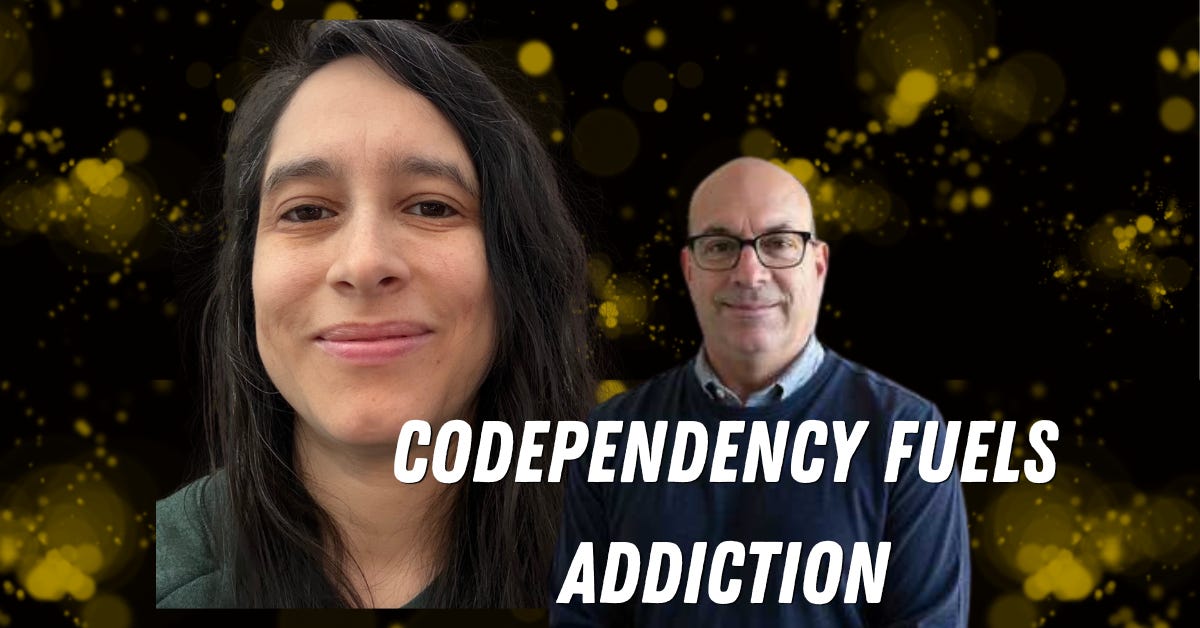
If you have ever felt an intense desire to make everyone like you, felt a sense of inadequacy fluctuating according to a spouse’s mood, tried to be your addicted loved one’s savior, or let your children’s choices determine your parenting success, this episode is for you!
After you listen, please share your thoughts with me.
If this article encouraged you and you’d like to help keep Honest Christian Conversations free, you’re welcome to support the ministry by clicking the image below. Thank you for your kindness!
